

.The world of education has undergone a revolutionary transformation in the era of artificial intelligence (AI). Educational technology, which once served merely as a facilitator, has now reshaped the way we learn, teach, and interact. It has redefined traditional learning methods while opening new pathways toward inclusivity and future readiness.

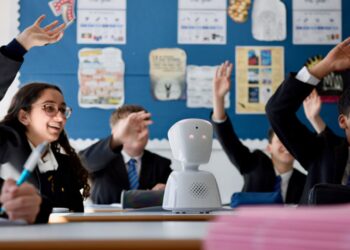
Technology in education has truly brought about significant transformation. In modern classrooms, digital devices have become essential. Technologies such as smart boards and digital textbooks have replaced conventional boards and printed books, creating a more engaging and dynamic learning environment.
Through the use of educational applications and online resources that support the teaching process, educators are now able to deliver lessons in more interactive and effective ways.
A New Paradigm in Education
![Digital literacy skills for teachers: are you digitally literate? [Quiz] – Teach Away](https://education.newscapz.com/wp-content/uploads/2026/01/digitalliteracyforteachers1.jpg)
AI has revolutionized education by enhancing the effectiveness of teaching and learning. This transformation occurs through personalized learning experiences, more accurate assessments, and easier access to information.
In today’s rapidly evolving technological landscape, the integration of AI into education has become inevitable. Therefore, responsible implementation is crucial to ensure that AI reaches its full potential while guaranteeing equitable access to education.
In 2020, the World Economic Forum (WEF) identified eight key transformations needed to improve educational quality in the era of the Fourth Industrial Revolution, also known as Education 4.0. With the emergence of AI, the adoption of these educational reforms can be accelerated, ensuring that learners are well prepared to thrive in this new era.
AI Realizing Education 4.0
The global shortage of teachers has created challenges in improving educational outcomes, particularly as the demand for educators is projected to rise significantly in the coming years.
By integrating AI into education, administrative tasks can be streamlined, allowing teachers to dedicate more time to meaningful student engagement.
The integration of AI in education also promises a revolution in assessment and analytics. AI-based evaluations provide educators with valuable insights to identify learning trends and support non-traditional assessment methods.
Research shows that personalized tutoring significantly improves learning outcomes. With AI, learning experiences can be tailored to individual needs, enhancing academic performance while addressing diverse learning styles.
AI also opens opportunities for students to develop digital literacy, critical thinking, problem-solving, and creativity—essential skills for future readiness. Integrating AI into education through both traditional and innovative methods is key to shaping a future-ready workforce.
Education 4.0 in the Era of Industry 4.0
The industrial revolution continues to evolve today. Although often overlooked, changes in industry are closely linked to innovations in education. In the era of Education 4.0, rapid technological advancement and innovation-driven production have become crucial, particularly in the educational sector.
Synergy between educational institutions and industry is no longer optional—it is essential to ensure curriculum relevance to real-world demands. In this era, classrooms are transforming into creative laboratories where digital technologies such as artificial intelligence and big data are used to personalize learning experiences.
The main challenge is no longer merely transferring knowledge, but shaping lifelong learners who are capable of critical and adaptive thinking. Thus, Education 4.0 serves as a driving force that not only responds to change but also produces innovators capable of shaping the future of global industry.
How Is AI Implemented in Companies?

The implementation of AI at the corporate level has become a key solution. In addressing complex challenges that were previously difficult to overcome. Across various industries, AI solutions have been widely adopted. From predictive maintenance of heavy assets to the use of machine learning for operational efficiency.
As every sector undergoes massive technological transformation, adapting educational systems becomes increasingly crucial. Aligning curricula with modern societal needs is the only way to ensure that knowledge and skills contribute meaningfully to the sustainable growth of Industry 4.0.
The emergence of new technologies has had a profound impact on both employees and organizations across sectors. Since each industry has unique operational characteristics. The demand for specialized skills and work patterns in Industry 4.0 has become highly diverse.
This phenomenon has driven major adjustments in talent structures and workforce distribution. In the future, human capital will play an even more strategic role, with job orientation and learning methods undergoing a fundamental shift to align human capabilities with machine intelligence.