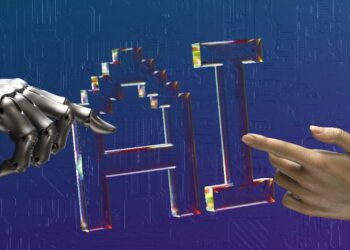



AI can’t replace your brain. But it can help it work smarter. Tools like ChatGPT, Grammarly, and Notion AI are just three of the many AI-powered platforms that students can use to enhance their learning sessions.
Unfortunately, instead of leveraging AI tools to boost productivity, many students use these tools merely as shortcuts. Focusing on speed rather than depth of understanding. This is a real shame considering that AI capabilities can push you beyond that if used properly.
A report released by Anthropic, based on hundreds of thousands of conversations with Claude.ai, revealed that university students are indeed using AI for learning.
Many students rely on AI to design practice questions, summarize study materials, explain complex algorithms, create technical diagrams, and visualize data.
Anthropic’s findings also show that students use AI for higher-order cognitive tasks — such as creating, analyzing, and applying concepts.
Understanding What AI Can (and Can’t) Do

AI was never meant to replace humans; it’s designed to assist them — whether in education or the workplace. In fact, according to the World Economic Forum, the global AI in education market is expected to grow from $5.18 billion in 2024 to $112.3 billion by 2034.
In today’s education landscape, both AI and humans bring unique strengths to the table. AI excels at handling large amounts of data, offering consistent and personalized feedback at scale.
Meanwhile, teachers provide something AI can’t — emotional intelligence. Educators can read subtle social cues, notice when students are confused or disengaged, and understand the personal factors that influence a student’s performance.
According to Forbes, combining both human and artificial intelligence can lead to remarkable collaboration. Around 60% of teachers have already used AI in classrooms for routine tasks like grading multiple-choice tests, monitoring student progress, and creating practice exercises. This allows them to focus more on giving meaningful, human-centered feedback.
Optimizing AI Tools for Everyday Learning
For students, optimizing AI use can make learning and task management significantly easier — especially if you understand which prompts to use and which tools fit your goals.
For instance, AI-powered analytical tools use machine learning, natural language processing, and data mining to explain concepts or make predictions. When conducting research, you can use tools like ChatGPT or Perplexity AI to gather insights and generate summaries.
AI can also streamline task management. Instead of struggling with scheduling and organization, use AI-powered tools to handle them for you. Some advanced task managers can track user behavior, analyze collected data, and automatically generate realistic plans and schedules.
For creative tasks, tools like Canva AI, Grammarly, and Jasper can help you brainstorm ideas, create visuals, and improve writing. These tools act as creative anchors that you can later expand on with your own touch.
The key is to learn how to think with AI, not depend on it.
How to Use AI Without Becoming Dependent

There are many cases where excessive reliance on AI hinders human skill development. However, when used wisely, AI can actually enhance human capabilities instead of replacing them.
Using AI effectively means gaining its full benefits — not just convenience. Here are a few practical ways to use AI as a learning partner rather than a shortcut:
- Ask AI to create a personalized study roadmap so you know what to focus on each week.
- Take notes and summarize manually even after using AI — this helps reinforce memory and comprehension.
- Request feedback on your assignments or essays.
- When encountering difficult material, ask AI to explain it in simpler terms until you understand.
By using AI intentionally, you’ll not only study smarter — you’ll train yourself to think critically, manage information efficiently, and develop lifelong learning skills. So, the key is not to depend on AI but to use AI as a tool only.