
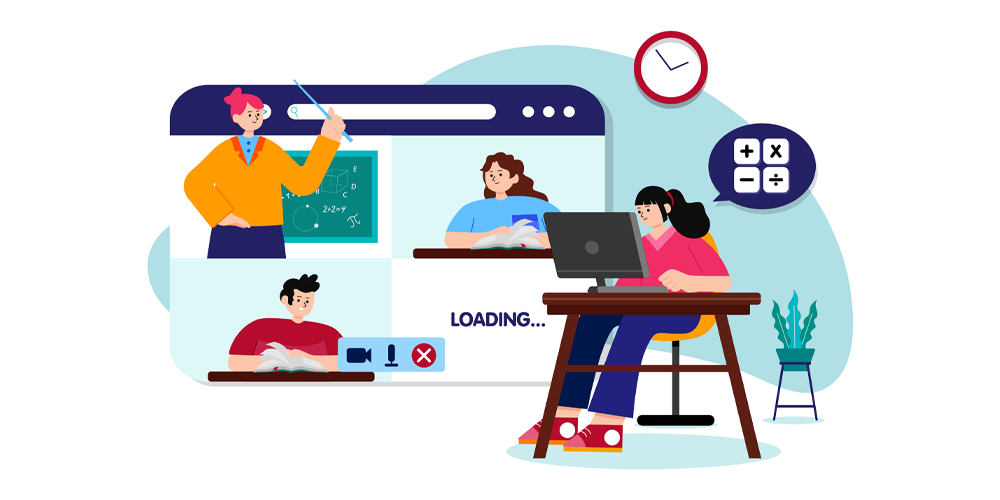
As the world of education continues to evolve, now it has never been more crucial to understand what separates blended learning from hybrid learning. Even as schools continue to embrace digital innovations in the post-pandemic era of online instruction, everyone is wondering: What model will be ideal for 2025 classrooms?

Let’s examine definitions, differences, advantages, and best applications of each learning models so that educators and policymakers make smarter, more informed decisions.
What is Hybrid Learning?
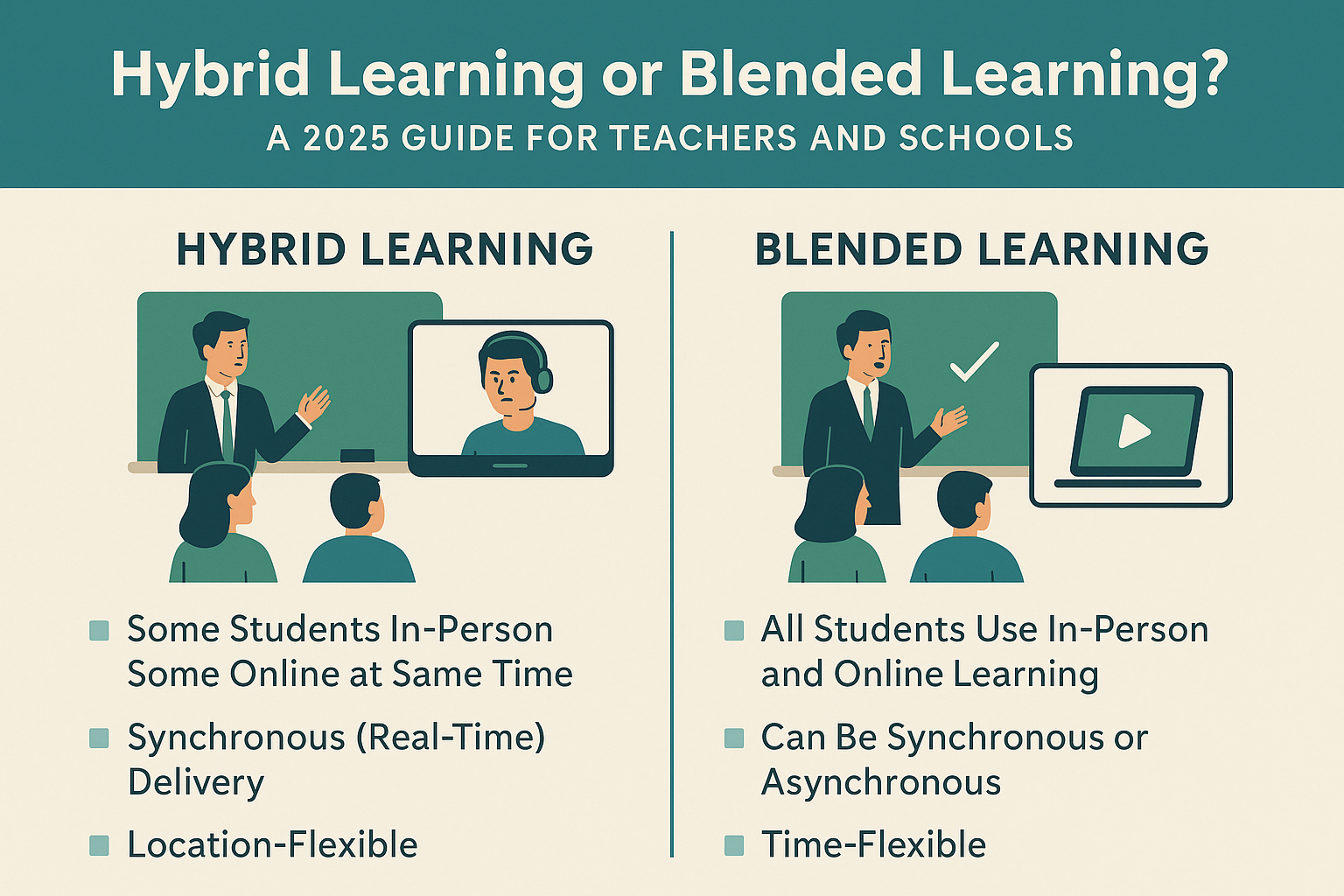
Hybrid learning, first off, refers to a subcategory where half are taught on-site and half are taught online simultaneously. The teacher teaches both groups at the same time, most often through video conferencing tools and using smart classroom devices.
It evolved over the pandemic periods and has been perfected using advanced EdTech software, including AI, cloud-hosted Learning Management Systems, and real-time collaboration tools.
✅ Key Features:
- Live interaction for on-campus and off-campus students
- Strong tech infrastructure needed
- Location flexibility not time flexibility
What Is Blended Learning?
Conversely, blended learning combines traditional face-to-face learning and online learning elements but with both modes being experienced by everyone. Blended models might not be as asynchronous as hybrid models, which do not need students to experience digital content at the same speed outside the classroom.
It’s less about packing children into boxes and more about augmenting the learning experience using multimedia, simulations, and electronic quizzes.
✅ Key Features:
- All students alternate between online and face-to-face
- Fosters self-directed learning
- More focus on the learning outcome rather than delivery
Hybrid vs Blended Learning: A Side-by-Side Comparison
Which Model Performs Best in 2025?
The best selection depends highly on your institution’s goals, infrastructure, and requirements of the students.
-
Choose Hybrid Learning if:
You need to reach out to all students across different locations at the same time (for instance, traveling, sick, or working hybrid schedules).
-
Choose Blended Learning if:
You want to maximize class experience, drive independent learning, and attain digital literacy at scale.
In all candor, there are a few forward-thinking schools today blending elements of both models, crafting adaptive, flexible, personalized, and interactive models.
✨ Conclusion
Hybrid vs. blended is not just semantics—it’s a strategic decision that means student success, teacher effectiveness, and institutional responsiveness as we embark on the future of education.
By understanding both models and their implications well, teachers can develop education that not only functions and is accessible but also endures in a shifting culture.
In 2025 and forward, it is no longer online or offline—it is learning ecosystems for everyone.