

In today’s digital era, accessing information requires nothing more than a gadget and an internet connection. Platforms such as YouTube, Google, and most recently ChatGPT are ready to provide answers to the questions that come to mind—ranging from scientific inquiries to emotional concerns.

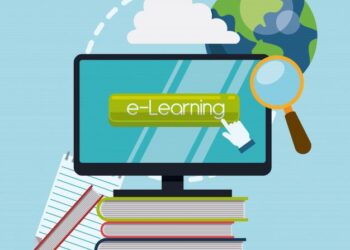
Today, learning as a university student or school pupil can also be done online. Similar to traditional courses, online courses offer outcomes that are professionally recognized. According to the latest Global Shapers Survey involving 25,000 young people from around the world, 77.84% of respondents reported having taken an online course in the past.
Unlike traditional education, which requires participants and students to be physically present, online learning allows learners to access materials from anywhere. Over the past few years, online learning has undergone significant improvements.
This phenomenon not only signifies a shift in how we access knowledge, but also represents an effective response to the ever-evolving demands of society in the digital age.
Online Learning Is Transforming Education

Online learning is transforming education in many ways, most notably by offering greater flexibility and accessibility. Through online learning, individuals are able to balance their studies with personal needs and circumstances.
One example is the online blended Executive MBA from Esade, or the Executive Master in Digital Business, Innovation & Entrepreneurship. These programs allow participants to combine online classes with face-to-face sessions, enabling full-time workers or those living in other countries to receive high-quality training.
Furthermore, online learning enables participants to enjoy a more personalized learning experience. Learners can design their own course selections based on subjects they are interested in. This freedom empowers students to choose content that aligns with their interests and skills.
As a result, they can gain comprehensive training in fields they are truly passionate about. Lastly, online learning also encourages collaboration. Every participant has equal opportunities to interact with peers and instructors from around the world, creating a rich learning environment that enhances both knowledge and social skills.
The Drawbacks of Online Learning

Like any learning model, online learning has its own advantages and disadvantages. For many participants, one of the biggest challenges is maintaining focus on a screen for extended periods. This increases the likelihood of distraction, especially due to social media.
Another major challenge is internet connectivity. Although internet penetration has increased significantly in recent years, many smaller cities still struggle with adequate connection speeds. Without a stable internet connection, continuity in learning can be disrupted.
Finally, students in early education stages still require direct interaction with their peers. However, in online classes, physical interaction between teachers and students is often minimal. Most concerning of all, not all teachers have the necessary resources and tools to conduct effective online classes, resulting in learning sessions that are far from optimal.
The Strong Potential of Online Learning

Online learning has revolutionized the way we learn by providing unmatched flexibility and accessibility. With the growing demand for technology-based education, e-learning has emerged as a solution for more adaptable learning experiences.
Digital technology has driven major changes, making e-learning a dominant trend. Artificial intelligence and machine learning have enhanced learning personalization through content tailored to individual needs.
Moreover, the potential of e-learning continues to expand with innovations such as virtual reality and augmented reality, which offer more immersive and modern learning experiences. Blockchain technology is also being implemented to ensure the security of digital certifications. The expansion of global internet access has opened new markets, particularly in developing countries.
Online learning is a modern educational method with a broad market. Its main segments include formal education, corporate training, skills development, professional certification, and language learning.
Formal education institutions such as schools and universities are adopting e-learning trends to provide more flexible access to education. Meanwhile, in skills development, demand for practical, skill-based courses continues to grow—especially in technology and soft skills.