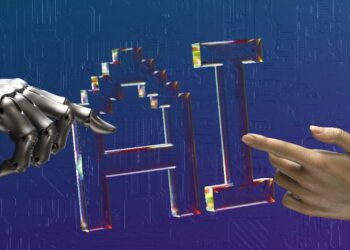



A recent report from the World Economic Forum reveals a sharp decline in the number of students enrolling in humanities programs at universities. In the United States, humanities enrollment has fallen by 17 percent over the past decade.
This decline is driven by the perception that disciplines such as history, philosophy, and sociology are no longer useful. AI has indirectly affected the teaching of the humanities.
For centuries, the humanities have served as the foundation of education. This field has taught students how to think, question, and make connections.
However, as generative platforms automate and simplify writing, summarizing, and analysis, the situation has rapidly changed. A survey by Inside Higher Ed found that 85 percent of students admitted to using generative AI to complete academic assignments.
The humanities, which once focused on teaching people how to think, must now compete with human-made algorithms. The challenge today is not only how to adopt AI, but also how to ensure that it does not weaken disciplines that teach humans how to think and feel.
Investment Priorities in Applied Sciences and Technology

There is an interesting contradiction. Although many recognize that AI is gradually displacing the humanities, research funding continues to flow more heavily toward AI, data science, and STEM fields. This suggests that the humanities are increasingly viewed as less relevant to industry needs.
The Australian government has even decided to raise tuition fees for humanities programs by 113 percent. According to Reinvantage, this policy was first announced in 2020. The move was intended to reduce tuition costs for nursing, education, and STEM programs by up to 62 percent.
The decision was also aimed at steering young people toward fields with the strongest job prospects. Interestingly, three years after graduation, humanities graduates in Australia were found to earn higher incomes than graduates in mathematics and science.
They also reported greater job satisfaction compared to their peers in science and mathematics.
A similar phenomenon is occurring in Europe. The debate over whether to pursue STEM or humanities degrees continues. Choosing the “wrong” major is often associated with the fear of unemployment.
As a result, many opt for STEM and computer-related fields in pursuit of financial security. However, research suggests that this line of thinking can be misleading.
Citing Reinvantage, the real trap is not which major one chooses, but the belief that a single qualification will protect individuals from a labor market that increasingly values skills that cannot be taught by a degree alone.
Changing Labor Market Demands

Budget cuts and economic uncertainty have led to widespread layoffs and made it more difficult for job seekers to find employment. In the United States, the unemployment rate has reached 4.6 percent, indicating a slowing economy. This phenomenon is not limited to the U.S., but is occurring across much of the world.
One factor contributing to rising unemployment is the presence of AI, which is replacing many jobs—particularly administrative roles. Today, AI functions as an assistant across various industries, helping humans complete their work.
For example, in healthcare, AI has reached a point where it can assist in diagnosing diseases. In marketing, AI is capable of creating highly personalized campaigns. In manufacturing, AI has been implemented in many factories, improving efficiency, boosting production, and reducing waste.
Fortunately, succeeding in these fields does not require becoming an engineer. However, strong digital skills are essential to support one’s work. Here are several ways to develop them:
First, improve AI literacy. Learn how AI works and what it can do for you. Next, digital literacy, data interpretation, confidence in using spreadsheets, and online research skills are now critical in most careers. These are transferable skills that remain relevant and enhance employability across sectors.
Equally important is learning programming languages. This helps individuals understand how AI is built and enables more effective interaction with AI systems. Finally, learn the art of designing effective prompts to obtain the best and most accurate results from AI tools. This includes understanding how to guide AI for specific tasks, reduce bias, and ensure safe and ethical outputs.